What socialization does
A functioning society depends on more than shared laws or infrastructure; it depends on a steady, everyday process that turns newborns into people who can read signals on a bus, stand in a voting line, share a meal, or scroll a newsfeed without tearing the social fabric apart. That process—socialization—teaches language, gestures, moral boundaries, emotional habits, and expectations about how life should unfold, so that millions of strangers can coordinate without constant negotiation or force. When this system works, children grow into adults who know how to participate, adapt, and disagree without destroying the relationships and institutions that hold their world together.
Socialization is the lifelong process through which people learn and internalize the norms, values, roles, and behavioral patterns of their society. It begins at birth and continues through old age as individuals encounter new situations, technologies, and communities that reshape how they think and act.
At its core, socialization answers basic questions: what counts as respectful, what brings shame, how to respond to anger, how to show care, who deserves authority, and what a “good life” looks like. Through this process, people move from being simply biological organisms to becoming social actors who can participate meaningfully in shared institutions such as schools, workplaces, religious communities, and political systems. Without this patterned learning, social life would fragment into constant misunderstanding, conflict, and isolation.
Socialization as a social prerequisite
Socialization enables individuals to become proficient members of their groups by aligning personal behavior with shared expectations. It cultivates a “collective consciousness” of common assumptions and moral boundaries that makes social order possible without direct coercion in every interaction. Children learn not only to obey rules but to feel that some actions are unthinkable and others are obvious or natural.
This internalization supports cooperation on a large scale. People learn traffic rules, classroom etiquette, workplace hierarchies, voting procedures, and unwritten codes that keep public spaces usable—from queuing calmly to lowering voices in shared environments. When socialization weakens or fragments, distrust rises, common ground shrinks, and institutions struggle to function because participants no longer share basic expectations about fairness, responsibility, or restraint.
The main agents of socialization
Socialization does not happen in the abstract; it takes shape through concrete relationships and institutions commonly described as agents of socialization. Families, peer groups, schools, religious communities, workplaces, and media each carry a portion of the work of teaching what counts as normal, desirable, or unacceptable.
These agents do not simply repeat the same messages. Each context offers its own rhythms, rewards, and conflicts, so individuals often move among different expectations and learn to navigate tensions between them. The interplay of home life, formal education, friendship networks, screen-based worlds, and spiritual or moral communities produces a layered identity that links people both to intimate circles and to wider, impersonal systems.
Families: first teachers of culture
Families usually act as the primary agent of socialization, especially in early childhood. Caregivers teach language, basic emotional regulation, bodily habits, and first moral distinctions such as sharing, honesty, and kindness, often long before any explicit instruction in rules or laws.
Family life also transmits cultural heritage: stories about ancestors, religious or secular rituals, food traditions, gender expectations, and attitudes toward work, authority, and difference. Research shows that early family communication patterns and emotional climates shape how children later handle conflict, trust others, and interpret power and fairness in broader institutions. Through these daily interactions, children absorb not just what adults say but how they live their values under stress, scarcity, or success.
Schools: training for larger systems
Schools function as powerful secondary agents of socialization by introducing children to a broader set of rules and roles beyond the family. Formal curricula teach literacy, numeracy, and civic knowledge, while the hidden curriculum teaches punctuality, cooperation, competition, and respect for institutional procedures.
Education also prepares students for participation in complex divisions of labor. Classrooms, group projects, assessments, and extracurricular activities help children practice teamwork, leadership, negotiation, and acceptance of standardized evaluations. Studies of social studies courses and civic education show that when schooling fails to connect norms and values to lived reality, its socializing purpose weakens, leaving adolescents skeptical about institutions and unsure of their role within them.
Peer groups: laboratories of identity
Peer groups—friends, classmates, teammates, online communities—become especially significant in adolescence and young adulthood. They provide a setting where individuals experiment with clothing, slang, music, beliefs, and behaviors outside direct adult control, often testing the boundaries of what earlier agents taught.
Peer influence can encourage both risk and resilience. Peer pressure may normalize unsafe behaviors, but peers can also promote academic effort, healthy habits, or civic engagement when group norms point in those directions. Research on gender-role and digital socialization shows that peers help define what counts as masculine or feminine, acceptable or embarrassing, and even what responsible online conduct looks like, with long-term consequences for relationships and self-understanding.
Media and digital environments
Media—television, film, news, gaming platforms, social networks, and influencers—now function as pervasive agents of socialization, often rivaling family and school in time and emotional impact. These channels expose people to alternative lifestyles, consumer desires, political narratives, and global crises, shaping perceptions of what is typical, admirable, or threatening.
Digital environments intensify this process because algorithms, recommendation systems, and feedback loops curate what appears on screens. Studies of digital socialization show that online spaces shape identity, values, and norms of interaction, but they also fragment attention and can foster echo chambers where narrow norms harden without exposure to dissenting views. This creates a double challenge: societies must socialize individuals to thrive within digital worlds while also teaching skills to question, resist, or renegotiate the norms those worlds promote.
Overlapping contexts of socialization
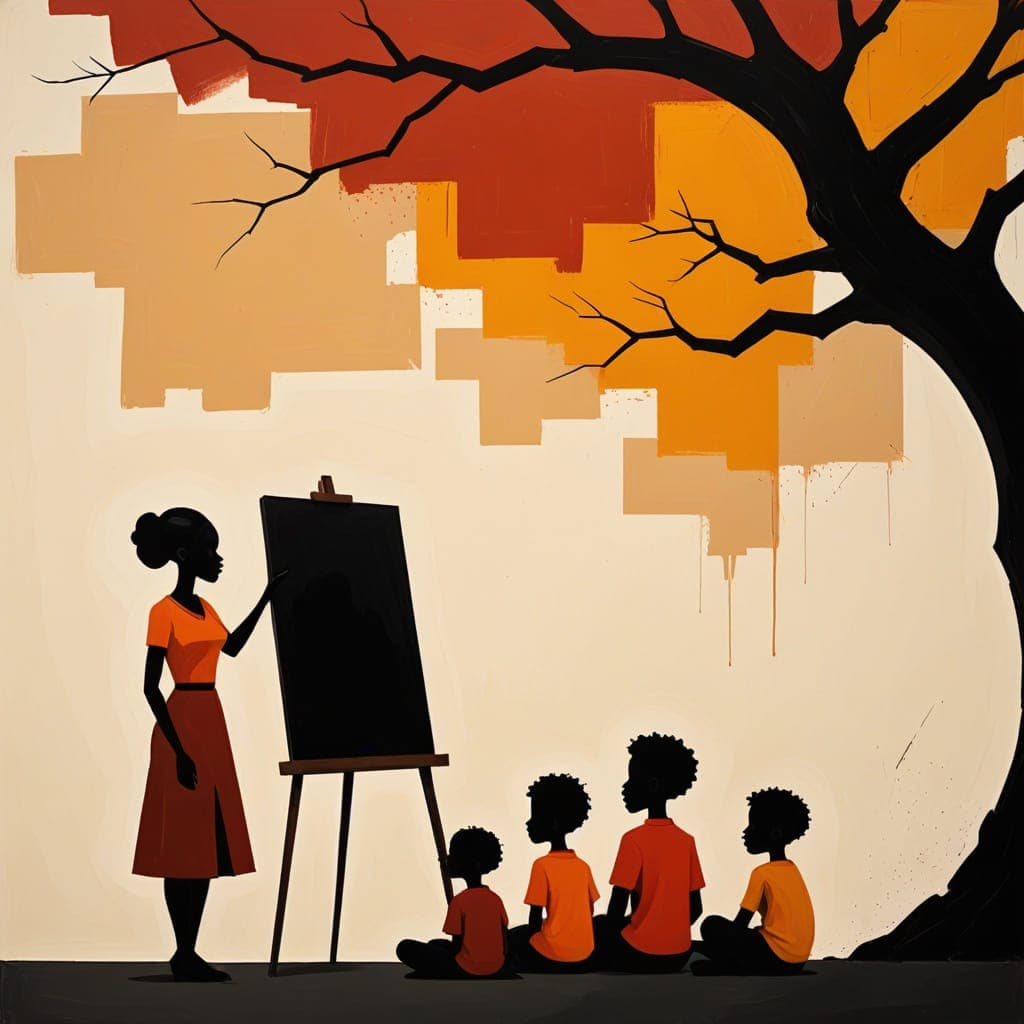
Socialization unfolds across multiple settings—home, school, workplace, religious community, neighborhood, and online networks—that often overlap or collide. A child may receive one message about gender or authority at home, a different one at school, and yet another from global media, creating friction but also opportunities for reflection and change.
Over a lifetime, individuals move through shifting role sets: student, worker, caregiver, neighbor, activist, elder. Each transition—migration, job loss, illness, retirement, joining or leaving institutions—requires fresh learning or “resocialization,” where previous habits no longer fit new conditions. A functioning society must therefore support not just early childhood socialization but ongoing adaptation as economic structures, technologies, and cultural norms evolve.
Cultural transmission across generations
One of the central functions of a socialization system is to transmit culture—language, rituals, values, practical know-how—from one generation to the next. Parents, elders, teachers, and community leaders pass on knowledge about farming or coding, mourning rituals or holiday celebrations, political memories or survival strategies, so that each generation does not start from zero.
Cultural transmission never occurs as perfect copying. Studies of cultural evolution and social learning show that people selectively imitate, innovate, and reinterpret what they receive, so traditions both stabilize and change over time. When wars, displacement, discrimination, or policy decisions disrupt intergenerational transmission, communities risk losing languages, crafts, ethical frameworks, or ecological knowledge that once anchored collective identity and adaptation.
Socialization as an ongoing, dynamic process
Socialization does not end with adulthood; it continues as people confront new technologies, family forms, political upheavals, and labor markets. Contemporary life often involves multiple careers, blended families, migration across borders, and exposure to global media, producing identities that remain flexible and sometimes fragmented.
Scholars of the life course emphasize that individuals actively process and sometimes resist social expectations rather than simply absorbing them. Professional socialization studies, for example, show how newcomers to occupations internalize specialized norms and ethics through mentoring, practice, and reflection, but also reshape those norms as they respond to new challenges. This dynamic character allows societies to preserve continuity while also correcting injustices and adjusting to new realities.
Socialization as a complex social system
Taken together, these elements form a complex system of socialization embedded in economic, political, legal, and cultural structures. Laws formalize some norms first learned informally; media amplify or challenge messages from families and schools; markets reward certain behaviors over others; and state policies influence which institutions gain resources to socialize the next generation.
A functioning society depends on this system achieving a difficult balance. It must integrate individuals into shared norms strongly enough to support cooperation and trust, yet leave room for critical thought, dissent, and moral innovation when inherited patterns prove harmful. When agents of socialization pull in entirely different directions or lose credibility, individuals may feel unmoored, and collective projects—from public health campaigns to climate policy or democratic participation—struggle to gain traction.
In this sense, socialization is not a background process but a central prerequisite for any society that aims to endure and adapt. By weaving together families, institutions, media, and everyday interactions into a coherent, evolving pattern, socialization makes it possible for strangers to share a world, build institutions they can trust, and pass on enough wisdom that future generations can both inherit and revise what came before.
Article by: Romina Wendell
Published: 03/09/2025
Last Modified: 12/14/2025
This page is a living document and overtime will be revised and updated to reflect evolving knowledge and to improve clarity.
- https://www.simplypsychology.org/socialization.html
- https://sociology.org/socialization-definition-sociology/
- https://pressbooks.bccampus.ca/introductiontosociology3/chapter/5-4-socialization-across-the-life-course/
- https://opentextbc.ca/introductiontosociology/chapter/chapter5-socialization/
- https://en.wikipedia.org/wiki/Socialization
- https://pmc.ncbi.nlm.nih.gov/articles/PMC10272593/
- https://ojs.dse.org.ua/index.php/dse/article/view/84
- https://sociology.institute/introduction-to-sociology/agents-socialisation-family-peers-school-media/
- https://www.simplypsychology.org/agents-of-socialization.html
- https://pressbooks.howardcc.edu/soci101/chapter/4-3-agents-of-socialization/
- https://pressbooks.library.torontomu.ca/socedind/chapter/__unknown__-6/
- https://lingusgu.elpub.ru/jour/article/view/291
- http://pedagogika.leu.lt/index.php/Pedagogika/article/download/88/78
- https://www.shs-conferences.org/articles/shsconf/pdf/2012/02/shsconf_shw2010_00008.pdf
- https://pmc.ncbi.nlm.nih.gov/articles/PMC11192989/
- https://sportpp.ru/article/view/8987
- https://pmc.ncbi.nlm.nih.gov/articles/PMC7166248/
- https://www.taylorfrancis.com/books/mono/10.4324/9781315144801/socialisation-life-course-klaus-hurrelmann-ullrich-bauer
- https://pmc.ncbi.nlm.nih.gov/articles/PMC2575430/
- https://en.wikipedia.org/wiki/The_Social_Construction_of_Reality
- https://publish.kne-publishing.com/index.php/jmehm/article/view/2016
- https://dash.harvard.edu/bitstream/1/10996793/1/cable,gino,staats_breaking-them-in_ASQ2013_edited.pdf
- https://www.semanticscholar.org/paper/58240c3a49a8931148645d422ead28ac941e5aa4
- https://iprjb.org/journals/index.php/JPCR/article/view/2342
- https://periodicals.karazin.ua/tpdu/article/view/24242
- https://www.semanticscholar.org/paper/acb311eae60e776fd7e450f4f95f38f0afdb0195
- https://journal.ipb.ac.id/jabm/article/view/56321
- https://physics.uz.ua/en/journals/issue-56-2024/professional-preparation-of-teachers-to-form-foreign-language-culture-as-a-condition-of-socialization-of-schoolchildren
- https://www.ewadirect.com/proceedings/lnep/article/view/5272
- https://pmc.ncbi.nlm.nih.gov/articles/PMC5502632/
- https://www.gauthmath.com/solution/1837666658362369/Read-the-paragraph-from-the-article-s-introduction-paragraphs-1-2-Clinton-Lexa-l
- https://www.coursehero.com/tutors-problems/Writing/79683480-1-What-are-three-ways-to-start-an-essay-that-will-engage-the/
- https://www.nsa.gov/portals/75/documents/news-features/declassified-documents/friedman-documents/reports-research/folder_047/41786769082578.pdf
- https://sudbury.ma.us/selectboardsoffice/wp-content/uploads/sites/342/2014/08/1967AnnualReport.pdf
- https://comunicacion-cientifica.com/wp-content/uploads/2023/02/087.-PDF-18th-World-Lake-Conference.pdf
- https://thinkinglikeavillage.ca/11-prerequisites-of-a-functioning-society/role-assignment-and-differentiation/
- https://files.eric.ed.gov/fulltext/ED334045.pdf
- https://thinkinglikeavillage.ca/11-prerequisites-of-a-functioning-society/shared-cognitive-orientation/
- https://laqlaserweb.laquintaca.gov/WebLink/DocView.aspx?id=34405&dbid=1&repo=CityofLaQuinta
- https://monoskop.org/images/4/4b/Robert_McCrum_-_The_Story_of_English_(New_and_Revised_Edition).pdf
- https://www.brandeis.edu/writing-program/resources/faculty/handouts/writing-successful-introductory-paragraphs.html
- https://www.ufv.ca/media/assets/academic-success-centre/handouts/How-to-write-an-introduction—-Grant-Morley.pdf
- https://www.grammarly.com/blog/writing-tips/how-to-write-an-introduction/
- https://www.indeed.com/career-advice/career-development/how-to-write-an-intro-paragraph
- https://beaconpointservices.org/introductory-paragraphs/
- https://www.youtube.com/watch?v=4WDclqoGouY
- https://www.tru.ca/__shared/assets/Introduction_Paragraphs57578.pdf