Words And Gesture
A shared system of communication is foundational to every society, enabling not just the exchange of information but the very possibility of collective living. Understanding how people communicate—through words, gestures, symbols, and silences—reveals much about their identities, values, and the ways their societies function.
All communication has a cultural context and is shaped by local customs, values, and social roles. At its core, a shared system of communication refers to the agreed-upon means by which members of a group transmit and interpret meaning. This system includes:
- Verbal language: Speech, writing, sign language.
- Non-verbal communication: Gestures, facial expressions, posture, eye contact.
- Symbolic forms: Emblems, art, clothing, ritual acts.
These modes are culturally constructed and passed on through generations—not just by instruction, but through everyday interaction and participation in community life. In some classrooms, teachers intentionally use gestures (like “thumbs up” or nodding) to bridge language gaps, helping learners feel included and understood. In Japan, bowing communicates respect, rank, or apology, while in the U.S., direct eye contact signals sincerity or confidence..
Language itself is never a neutral tool but communication reflects, reinforces, as well as can challenge socio-cultural structures and ideas. Without a common ground for communication, cooperation and social order become nearly impossible. Every known society relies on a shared communication system to:
- Transmit knowledge and traditions.
- Coordinate action—whether hunting, farming, or organizing protests.
- Maintain relationships and express emotions.
- Define membership, boundaries, and shared values.

Shared systems of communication are neither universal nor static. They evolve and adapt alongside social and technological developments. Requiring awareness of the cultural “rules” that shape both words and gesture, a society’s system of communication ultimately reflects its structure, values, and power dynamics.
Modes and Variations
Communication is composed of an array of verbal, non-verbal, and symbolic channels that allow individuals and groups to create connections, establish norms, and signal belonging. They have semanticity & pragmatic value. Signs, words, or actions carry culturally specific meanings as well s serve practical purposes.
There exist diverse methods for expressing and interpreting meaning within a shared system of communcation. Each adapts to immediate and longterm social needs and cultural expectations.
These channels work together as a foundation for everyday interaction, enabling communities to transfer knowledge, forge relationships, and navigate the complexities of social life. Whether through speech, writing, gesture, or symbol, each mode of communication carries unique messages and social functions that help maintain and shape a society’s collective fabric.
Modes of Communication
Modes of communication form the basic infrastructure of any society, linking bodies, stories, and symbols into shared meaning. Spoken, written, non-verbal, and symbolic systems overlap in practice, yet each mode carries distinct strengths and limitations. Together, they shape how communities remember, coordinate, include, and exclude across generations.
Writing as Cultural Memory
Modes of communication form the basic infrastructure of any society, linking bodies, stories, and symbols into shared meaning. Spoken, written, non-verbal, and symbolic systems overlap in practice, yet each mode carries distinct strengths and limitations. Together, these systems shape how communities remember, coordinate, include, and exclude across generations.
Transgenerational transmission through writing allows societies to:
- Accumulate knowledge over time: Complex ideas, innovations, and discoveries—including in science, mathematics, and philosophy—can build upon previous generations’ work. Oral-only societies must rely on memory, which is more vulnerable to loss and distortion.
- Establish complex governance and legal systems: Written laws, contracts, and records provide stable institutions, continuity, and accountability well beyond the memory of a single generation.
- Coordinate large-scale societies: Administrative, economic, and military systems become far more scalable as written records and plans can be referenced and updated.
- Preserve culture and identity: Myths, values, literature, and sacred texts can be transmitted with precision across centuries, creating a shared cultural canon.
- Enable innovation and rapid adaptation: Technologies and solutions may be improved and widely disseminated, rather than being reinvented or lost with each generation.
The Living Pulse of Speech
Verbal communication employs spoken language to share ideas, negotiate relationships, and express emotion in real time. Unlike other animals that rely upon grunts, gestures, and signals, human verbal language utilizes a vast repertoire of sounds and structures to create an open system of meaning. While animal communication is often tied to immediate needs or specific signals, human speech can describe abstract concepts, discuss the past or future, and generate novel ideas as needed. This flexibility enables shared planning, intricate storytelling, humour, persuasion, and the nuanced negotiation of social bonds, fostering collective problem-solving and cultural cohesion.
Each language encodes particular categories, metaphors, and rhythms. These elements guide speakers’ attention to space, time, kinship, and responsibility. Written language stretches these verbal worlds across distances and generations, carrying laws, myths, and everyday stories beyond their original contexts. Although written language primarily preserves information and extends its reach, spoken language is relied upon for the immediate, interactive, and emotionally rich.
Speech acts as the pulse of community, sustaining oral traditions and the lived dynamics of everyday connection. Verbal communication allows groups to react swiftly to challenges, adapt to sudden changes, and build trust through voice, tone, and shared presence. It fosters resilience, creativity, and belonging—qualities essential to collaborative spirit.
The Silent Grammar of Gesture
Non-verbal communication weaves subtlety and depth into human interactions, often revealing truths behind or beyond spoken words. Non-verbal signals allow rapid assessment of intent, mood, and social status, which can diffuse conflict, build trust, or indicate allegiance prior to spoken exchange. Gestures and facial expressions can underscore, contradict, or soften verbal messages, functioning as indispensable tools in diplomacy, teaching, and caregiving. In cross-cultural contexts, non-verbal cues may bridge language gaps, allowing mutual understanding and empathy in the absence of words.
While many animals rely on bodily signals, human non-verbal communication is exceptionally complex and deeply integrated with culture. Individuals possess nuanced, voluntary control over gesture, facial expression, and gaze, enabling layers of irony, sarcasm, or subtle encouragement that go beyond the instinctual signals of other species. Human societies also codify and reinterpret non-verbal signs—such as handshakes, bows, or dress codes—transforming them into intricate rituals of inclusion, exclusion, or transition. As a result, non-verbal communication is not merely biologically rooted but also creatively adapted, making it a versatile and context-rich channel for social meaning.
The Semiotics of Belonging
Symbolic communication operates through clothing, colours, emblems, landscapes, and ritual actions that condense complex meanings into shared signs. A uniform, a mourning colour, or a recurring ceremony can signal belonging, hierarchy, or resistance instantly, even among strangers. Such symbolic codes render everyday environments readable, making identity and power visible—or deliberately obscured.
Symbolic communication allows societies to compress vast histories, values, and beliefs into instantly recognisable forms. Given the portability and adaptability of symbols, groups may signal unity or protest, reinforce collective memory, and transmit values without the need for words.
Symbols can resolve ambiguity, assist in the organization of large groups around shared narratives, and anchor traditions through visual and material expression. Rituals and emblems not only transmit meaning but also create emotional resonance, fostering pride, solidarity, or reflection—often transcending linguistic boundaries.
The Living Infrastructure of Culture
Taken together, verbal, non-verbal, and symbolic modes create a multilayered communicative field. Every word, pause, and object can matter. Societies that recognise and tend all three modes gain greater capacity to coordinate action and repair conflict, enabling them to sustain a sense of shared life over time.
By weaving these channels, communities can respond flexibly to new challenges, balancing swift, intuitive exchanges with lasting records and resonant symbols. This rich tapestry of communication supports not only practical cooperation but also the cultivation of trust, identity, and meaning. When a group values the full spectrum—from voice and gesture to ritual and text—it unlocks deeper understanding, strengthens its social bonds, and ensures its stories and wisdom continue to echo through generations. In this way, the interplay of all modes becomes the living infrastructure of culture itself.
High-Context vs. Low-Context Cultures
Anthropologist Edward T. Hall introduced the idea that cultures fall along a spectrum from high- to low-context in their communication styles. High-context and low-context cultures differ in the degree to which implicit context or explicit wording is required for effective communication. Hall described high-context cultures, such as those found in East Asia, the Middle East, and Latin America, wherein much meaning is conveyed through implication, shared experience, tone, and non-verbal cues. Words compose only a portion of the message. Conversely, low-context cultures, including those of the United States, Germany, and Scandinavia, favour explicit and direct communication, expecting language to ‘say what it means’ with minimal reliance on shared, unspoken context.
The distinction between high- and low-context cultures extends beyond nationality and language and influences workplace dynamics, online communication, and social relationships. In high-context settings, familiarity with group history and unwritten social rules is critical, and much is understood without being spelled out; relationships and subtlety often take precedence over efficiency. In low-context environments, explicit instructions, procedures, and feedback are prioritised, which proves advantageous in diverse settings where shared background or long-term bonds cannot be assumed. Recognizing these variations assists individuals and groups in adapting communication styles and supports more harmonious collaboration across cultural boundaries.
Hall’s spectrum illustrates how communities generate meaning not only through vocabulary but also through history, social expectation, and patterned interaction. Such frameworks help explain why communication difficulties arise even among parties sharing common goals or values, shaping how trust, leadership, and emotion circulate.
| Culture Type | Main Features | Example |
|---|---|---|
| High-context | Indirect, emphasizes relationships and shared understanding | Japan—meaning often inferred from nonverbal cues. |
| Low-context | Direct, relies on explicit verbal expression | Germany—instructions and agreements are spelled out in detail. |
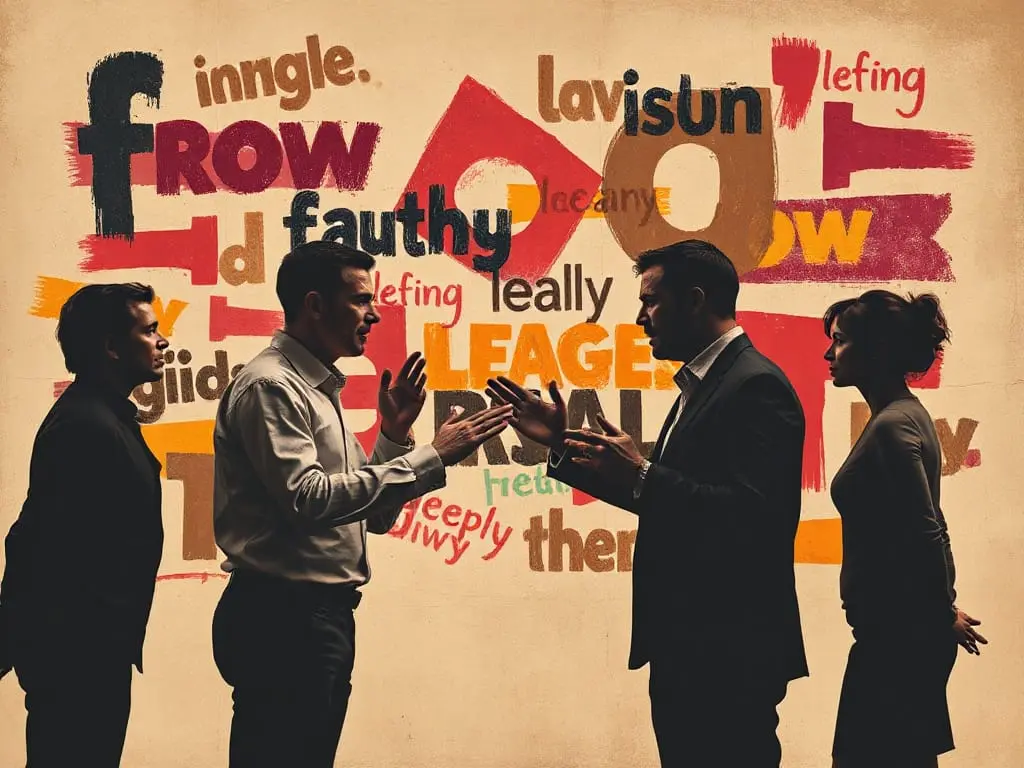
Status & Structure
Communication does far more than convey facts; it actively shapes the organization of societies and the understanding of power, status, and belonging. The rules that determine who may speak, who listens, and how messages are delivered reflect and reinforce social hierarchies—whether shaped by age, gender, profession, or authority.
In various cultures, elders or leaders may benefit from more time or certain forms of address, while younger individuals might be expected to use deferential language or remain silent in specific contexts.
Public rituals—such as weddings, graduations, and political inaugurations—rely on highly stylised communication, employing gestures, repeated phrases, and symbolic acts to emphasise community values and affirm group identity. These events are often accompanied by ritual speeches, music, or dress codes, rendering abstract concepts like unity, transition, or celebration tangible and memorable.
Everyday storytelling, gossip, and the retelling of local legends play a vital role in circulating community norms and shaping collective memory. Myths and rumours often gain influence not simply for their content, but for their capacity to bring people together, define social boundaries, and foster a sense of shared experience. Formal and informal channels of communication together create the framework that holds social life together, shaping relationships, reinforcing cultural boundaries, and guiding individuals’ sense-making.
Examples:
- Japanese Tea Ceremony: Symbolic communication sustains cultural norms and community bonds through this highly ritualised practice. The ceremony encompasses more than the act of drinking tea; it expresses and reinforces values such as harmony, respect, and tranquillity, with every gesture and phrase conveying role and meaning within society.
- National Holidays and Public Rituals: Collective identity is celebrated through events like Independence Day in the United States or Bastille Day in France. Speeches, songs, parades, and rituals transmit shared histories and values, delineate group boundaries, and create a sense of belonging.
- Passing the Coffin in Funerals: Contemporary funeral rituals in which attendees physically pass the coffin convey solidarity and emotional connection without words. This act draws participants into a collective circle of shared grief and commitment.
- Social Media and Identity: Online communication platforms, such as group chats and social networking sites, maintain community ties and cultural identity when members are physically separated. Through the circulation of memes, language, and in-group references, norms are reinforced and adapted in new contexts.
Communication, whether through ritual, hierarchy, or daily exchange, functions as both social glue and cultural script. Beyond transmitting messages, it enacts belonging, shapes norms, and gives structure to collective experience. Through speech, gesture, and shared performance, people continually (re)make the meanings that hold them together, ensuring that expression and identity evolve with changing worlds.
Learning and Passing Down
Language acquisition relies upon cultural transmission. Language and symbols are learned through socialization and interaction. The development of communicative competence extends far beyond memorizing vocabulary or mastering grammar.
From birth, children absorb not only the mechanics of language but also the social rules that guide when, how, and to whom certain words and gestures are appropriate. Through constant observation and participation, children are exposed to social cues—such as greetings, directions, and silences—and gradually attune to their community’s signals for politeness, respect, or disagreement.
Young learners discern distinctions between formal and informal styles of speaking, and discover which jokes and stories align with their social roles.
In many Indigenous cultures, children learn to interpret and use non-verbal forms of communication—such as subtle gestures or indirect expressions—simply by participating in daily family and community life. Among Menominee Nation families, for instance, children convey meaning verbally and through gestures that express understanding and emotion in ways distinctly tied to their cultural context.
The phenomenon of ‘code-switching’ is seen in multilingual or multicultural environments. Children in bilingual families may shift seamlessly between languages, using one language at home with elders and another on the playground. Such shifts demonstrate an understanding not only of vocabulary, but also of situational appropriateness and the cultural expectations attached to each setting. Through these everyday practices, children do not simply inherit a language; they become competent members of their social world.
Disorder and Exclusion
When communication systems falter or break down, the social fabric binding groups together may unravel. Language barriers, cultural misunderstandings, or the systemic exclusion of minority communication methods—such as the suppression of Indigenous languages or sign languages—can result in alienation, marginalization, or even open conflict. Members may be unable to participate fully in civic, economic, or cultural life. The weakening of social cohesion may manifest as mistrust, collapsed cooperation, and the loss of valuable cultural knowledge.
Adaptive responses can sometimes bridge communication gaps. One response is the creation of pidgins and creoles. A pidgin develops among speakers of different languages needing mutual understanding for trade or work—a simplified, makeshift system borrowing from each group’s language. When a pidgin becomes the native language of subsequent generations, it evolves into a creole: a stable language with its own grammar and vocabulary. Haitian Creole developed through contact between French colonists and enslaved Africans, establishing a durable bridge within a diverse society.
The adoption of a lingua franca—such as English in global business, science, or aviation, or Kiswahili in East Africa—serves as another means of integrating speakers from different backgrounds and promoting shared understanding.
In contexts where oral or written language is not accessible to all, such as in Deaf communities, societies may formalize sign languages or develop auxiliary systems such as picture boards or Braille. The global recognition of American Sign Language (ASL) and other national sign languages, alongside efforts to teach and accommodate them in schools and public environments, exemplify collective attempts to integrate marginalized communicators. With an ongoing commitment to improvement, these adaptations play a crucial role in restoring inclusion and rebuilding the trust and cooperation vital to social cohesion.
Inheritance & Creation
A shared system of communication stands as both inheritance and ongoing creation—a vital framework connecting generations, sustaining identity, and continually adjusting to new needs and circumstances. Through language, gesture, symbol, and technological adaptation, human communities establish the means to remember, organize, and envision collective existence. The capacities and choices within these systems shape the contours of trust, understanding, and belonging, both within groups and across cultural divides. As these systems develop, adapt, and open to new forms of inclusion, they form the enduring foundation upon which social life is built.
Article by: Romina Wendell
Published: 03/04/2025
Last Modified: 12/04/2025
This page is a living document and overtime will be revised and updated to reflect evolving knowledge and to improve clarity.
- https://pressbooks.openeducationalberta.ca/anth/chapter/language/
- https://pressbooks.nebraska.edu/anth110/chapter/language-and-communication/
- http://anthrotheory.pbworks.com/w/page/29532388/Linguistic%20Anthropology
- https://www.ebsco.com/research-starters/communication-and-mass-media/high-context-and-low-context-cultures
- https://www.beyondintractability.org/essay/communication_tools
- https://www.aupress.ca/app/uploads/120235_99Z_Dron_Anderson-Teaching_Crowds.pdf
- https://pdfs.semanticscholar.org/2f77/95985092a552a04ec0cefbb2c1b6a3c5b36d.pdf
- https://anthroholic.com/non-verbal-communication
- https://en.wikipedia.org/wiki/High-context_and_low-context_cultures
- https://www.sciencedirect.com/science/article/pii/S2214629617302050
- https://www.farmingdale.edu/courses/index.shtml
- https://www.hocking.edu/hubfs/Hocking%20College%202025-2026%20Catalog%20V1.pdf
- https://www.warren-wilson.edu/wp-content/uploads/2024/07/2024-25-Warren-Wilson-College-Catalog.pdf
- https://www.p12.nysed.gov/irs/courseCatalog/sced-course-codes-2025-26.xlsx
- https://teachertaskforce.org/sites/default/files/migrate_default_content_files/maryburns_1.pdf
- https://annualmeeting.americananthro.org/wp-content/uploads/2024/11/Final-Program-2024-AAA-Annual-Meeting-PRAXIS-1.pdf
- https://www.kings.edu/pdf/Catalog2012-2013.pdf
- https://databases.library.jhu.edu
- https://ainowinstitute.org/wp-content/uploads/2023/04/AI_Now_2019_Report.pdf
- https://pressbooks.atlanticoer-relatlantique.ca/writingforsuccess/chapter/6-1-purpose-audience-tone-and-content/
- https://www.coursesidekick.com/communications/496542
- https://www.uwinnipeg.ca/academics/calendar/docs/all-course-descriptions.pdf
- https://socialsci.libretexts.org/Courses/Citrus_College/Sociology_of_the_Family_(Hammond)/06:_Communication/6.04:_Communication_in_Relationships/6.4.02:_Cultural_Context_of_Communication
- https://amberroweblog.files.wordpress.com/2016/11/brent-davis-dennis-sumara-rebecca-luce-kapler-engaging-minds_-cultures-of-education-and-practices-of-teaching-routledge-2015.pdf
- https://irsi.ubc.ca/sites/default/files/inline-files/Executive_Summary_English_Web.pdf
- https://www.ijdesign.org/index.php/IJDesign/article/view/313/164
- https://ised-isde.canada.ca/site/canada-fundamental-science-review/sites/default/files/attachments/2022/ScienceReview_April2017.pdf
- https://www.researchpublish.com/upload/book/NONVERBAL%20COMMUNICATION%20ACROSS-7913.pdf
- https://www.sapiens.org/language/what-is-linguistic-anthropology/
- https://pressbooks.nebraska.edu/anth110/chapter/language-and-communication/
https://www.ebsco.com/research-starters/communication-and-mass-media/sociology-non-verbal-communication
https://pmc.ncbi.nlm.nih.gov/articles/PMC4214247/
https://pmc.ncbi.nlm.nih.gov/articles/PMC6769117/
https://pmc.ncbi.nlm.nih.gov/articles/PMC4493318/
https://www.britannica.com/topic/communication/Types-of-communication
https://www.openanthroencyclopedia.org/entries/silence
https://www.scirp.org/journal/paperinformation?paperid=140465
https://socialsci.libretexts.org/Bookshelves/Anthropology/Cultural_Anthropology/Cultural_Anthropology_(Evans)/05:_Language/5.4:_Non-verbal_Communication
https://anthroholic.com/verbal-communication